A human perspective on an extraordinary future
Curiosity,in motion.
Come explore the beautiful, strange, very human side of emerging technology. Field notes on AI, XR, robotics, and what comes next. By Dominique Wu.
Exploring / Making / Connecting the dots
A small invitation to wonder.
Field notes · 01–05
The frontier, in five scenes.
What “emerging tech” actually means on the ground. Follow the signals through each system.
Reality grows a third dimension.
Headsets stopped being demos. The interesting question is which problems deserve one — immersion earns its seat when consequence, place, or practice is the point.
They learn by watching us.
Humanoids pick up tasks from demonstration now, and quadrupeds already walk inspection routes on real job sites. Show, don’t program — demonstration is the new interface.
Imagining what happens next.
The quiet engine behind the rest of this list: models that hold a small copy of the world and run it forward. Prediction is the product — everything else is interface.
Seeing through smoke.
Thermal vision finds a person in a black room, and the incident map updates mid-burn. Technology is at its best when seconds count — and it still follows the crew, not the other way around.
The grid meets the garage.
An EV is a battery that happens to drive — which makes every parking lot a storage question and every fleet a grid asset in waiting.
The Blog
Latest writing
Longer-form thinking on the things the weekly brief only has room to point at.
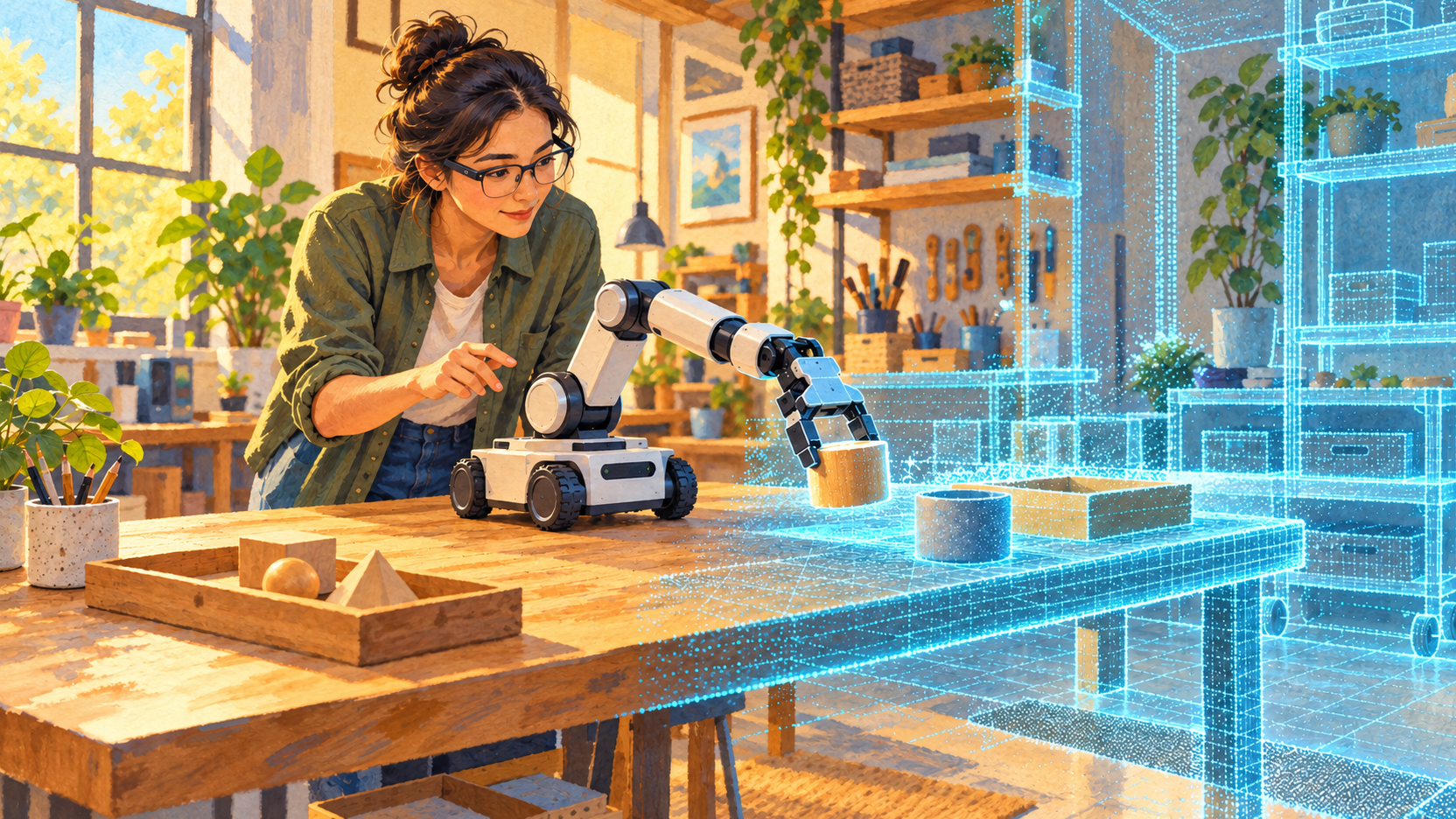
AI Is Learning Its Way Around
Glasses, world models, and robots are starting to connect. Here’s what looks useful, what still looks early, and why educators should pay attention.
A pair of glasses. A robot carrying a warehouse tote. A digital room you can walk through. At first glance, they belong in different conversations. One is a gadget, one is a machine, and one is something you might build for a game. But…
The School Bus Has a Second Shift
Parked electric school buses can support the grid, but the real opportunity includes chargers, local rules, and people trained to keep the whole system working.
EnergyThe Public Domain Is a Creator’s Garage Sale
Old maps, museum images, and 3D scans can become thoughtful AR stories. Start with one object, keep its source notes, and make the difference between evidence and imagination visible.
XRYour Next Classroom Has a Reset Button
World models could give students more chances to practice, question, and revise. A classroom-sized experiment, with real limits and access in mind.
World ModelsInside every issue
Three things, every week.
One topic, taken apart
An emerging-tech topic explained by a practitioner who builds this stuff — including the failure modes.
What’s actually worth your time
The launches, research, and demos across AI, XR, and spatial computing that earned a mention — and nothing that didn’t.
Something to use Monday
A tool, a paper, or a question you can put to work this week.
The Podcast
Spatial AI: Bridge the Gaps
Less hype. More insight. A little wonder. Long-form conversations with the people building immersive and AI systems — running since 2024, on Apple, Spotify, and iHeart.
Spatial AI: Bridge the Gaps is a production of XReality Pro, Dominique Wu’s company — separate from her newsletter and from any public-sector role. Guest views are their own.
Still here? Then you’re my kind of reader.
No hype, no funnel theater, no ten-part launch sequence. One email a week that respects your time, and a one-click exit whenever it stops earning it.
By subscribing, you agree to receive Dominique Wu’s free weekly Emerging Tech newsletter. Unsubscribe anytime with one click. Privacy Policy
Emerging Tech is a personal publication by Dominique Wu, offered in her individual capacity. It is not affiliated with, sponsored by, or endorsed by the California Community Colleges Chancellor’s Office, any college or district, or the AI Fellows Program.